


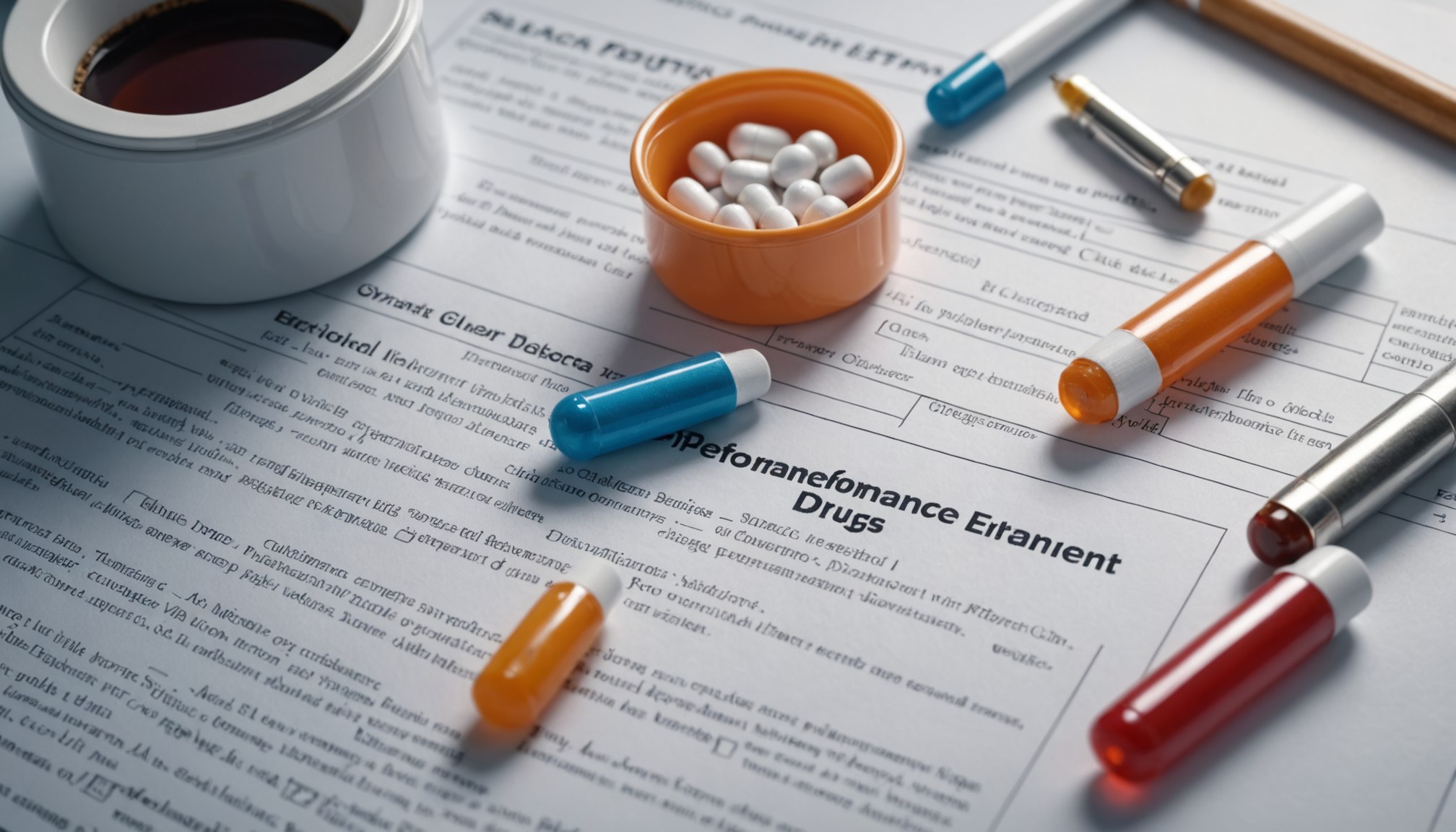
Performance enhancement drugs: a medical glossary, clear explanation, and safety checklist
Disclaimer: This content is for general educational purposes only and does not replace professional medical advice, diagnosis, or treatment. Performance enhancement drugs can carry significant health risks and legal consequences. Always consult a qualified healthcare professional before using any medication or supplement.
Key terms (glossary)
- Performance enhancement drugs (PEDs)
- Substances used to improve physical or cognitive performance beyond natural limits.
- Anabolic-androgenic steroids (AAS)
- Synthetic derivatives of testosterone used to increase muscle mass and strength.
- Stimulants
- Drugs that increase alertness, energy, or endurance by stimulating the central nervous system.
- Erythropoietin (EPO)
- A hormone that increases red blood cell production, improving oxygen delivery.
- Human growth hormone (HGH)
- A hormone involved in growth, metabolism, and tissue repair.
- Nootropics
- Substances marketed to enhance cognitive functions such as memory or focus.
- Beta-2 agonists
- Medications that relax airway muscles and may increase muscle mass or fat loss.
- Doping
- The use of banned substances or methods to gain an unfair performance advantage.
- Adverse effects
- Unwanted or harmful reactions caused by a drug.
- Dependence
- A state in which the body or mind relies on a substance to function normally.
- Withdrawal
- Symptoms that occur when stopping a drug after prolonged use.
- Therapeutic use exemption (TUE)
- Official permission to use a normally prohibited drug for medical reasons.
- Cardiovascular risk
- The likelihood of heart or blood vessel complications.
- Liver toxicity
- Damage to liver cells caused by chemical substances.
Clear explanation
Why people use performance enhancement drugs
Individuals may turn to performance enhancement drugs to improve athletic results, increase muscle mass, boost endurance, or enhance concentration and productivity. Social pressure, competitive environments, body image concerns, and misinformation about “safe” use often contribute to experimentation.
Common manifestations and short-term effects
Short-term effects depend on the substance. Stimulants may cause increased heart rate and anxiety, while anabolic steroids can lead to rapid muscle gain and mood changes. Cognitive enhancers may improve alertness but disrupt sleep or appetite.
Health risks and long-term consequences
Long-term use of performance enhancement drugs is associated with cardiovascular disease, hormonal imbalance, psychiatric symptoms, liver and kidney damage, and increased risk of dependency. Some effects may be irreversible, especially with prolonged unsupervised use.
How risks are identified and monitored
Healthcare professionals assess risks through medical history, physical examination, and laboratory tests (blood counts, liver enzymes, hormone levels). In sports settings, anti-doping agencies use biological passports and testing programs.
Medical and supportive approaches
Management focuses on discontinuation when appropriate, treating complications, and supporting recovery through medical supervision. Education, mental health support, and safer alternatives such as evidence-based training and nutrition are emphasized.
Reader checklist
What you can do
- Learn the medical facts about performance enhancement drugs.
- Discuss goals (fitness, focus, recovery) with a healthcare professional.
- Choose evidence-based training, nutrition, and rest strategies.
- Report any unusual symptoms promptly.
What to avoid
- Using drugs obtained without a prescription or medical oversight.
- Mixing multiple performance-enhancing substances.
- Relying on online forums or influencers for medical advice.
- Ignoring mental health changes such as mood swings or aggression.
When to see a doctor urgently
- Chest pain, shortness of breath, or fainting.
- Severe mood changes, confusion, or hallucinations.
- Yellowing of the skin or eyes (possible liver injury).
- Persistent insomnia, tremors, or rapid heart rate.
| Term | In simple words | Why it matters |
|---|---|---|
| Anabolic steroids | Muscle-building hormone drugs | Can damage hormones, heart, and liver |
| Stimulants | Drugs that boost energy and alertness | Increase risk of heart rhythm problems |
| EPO | Raises red blood cells | Thickens blood, raising clot risk |
| Nootropics | “Brain boosters” | Limited evidence, possible side effects |
Specialist comment (generalized): Clinicians often emphasize that while the promise of enhanced performance is appealing, the hidden health costs of unsupervised drug use can outweigh short-term gains. Sustainable performance is usually built on training, recovery, and individualized medical care rather than pharmacological shortcuts.
For more general health education, see our uncategorized health articles, explore our medical glossary resources, or read additional patient safety checklists.
Sources
- World Anti-Doping Agency (WADA). Prohibited List and Health Risks.
- National Institute on Drug Abuse (NIDA). Anabolic Steroids and Other Appearance and Performance Enhancing Drugs.
- Mayo Clinic. Performance-enhancing drugs: Know the risks.
- British Journal of Sports Medicine. Reviews on doping and long-term health effects.
If precise statistics vary by substance and population, this is noted due to ongoing research and updates from authoritative bodies.